Sunday, November 2, 2008

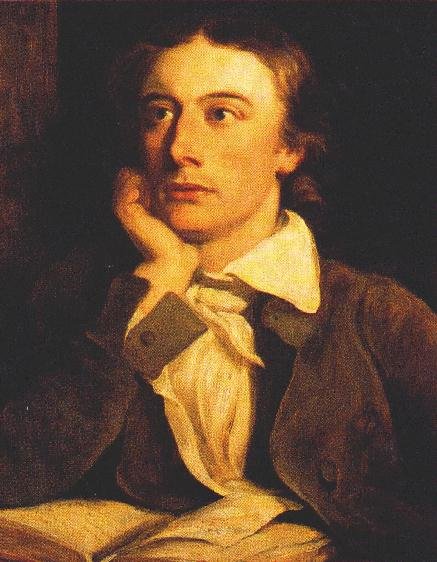
John Keats


I'm pretty sure that Keats is my hero. He accomplished more in his short life that I will in my entire life and that not only impresses me, but also is unsettling. I love the Romantic era, and a large part of that is because of Keats. That most of his writing comes to us in the form of letters makes me feel as if I am connected to his personal life. Letters then, as emails now, are very personal. Not only do they express the relationship between the sender and receiver, they usually show deep emotions and ideas. I really enjoy that he gained most of his ideas for his writings from the classics. That he described things like 'almost a remembrance' and 'negative capability' so beautifully amazes me. He was only 3 years older than I am when he died. My favorite of all his odes is the Ode to Psyche:


O GODDESS! hear these tuneless numbers, wrung
By sweet enforcement and remembrance dear,
And pardon that thy secrets should be sung
Even into thine own soft-conched ear:
Surely I dreamt to-day, or did I see
The winged Psyche with awaken’d eyes?
I wander’d in a forest thoughtlessly,
And, on the sudden, fainting with surprise,
Saw two fair creatures, couched side by side
In deepest grass, beneath the whisp’ring roof
Of leaves and trembled blossoms, where there ran
A brooklet, scarce espied:
’Mid hush’d, cool-rooted flowers, fragrant-eyed,
Blue, silver-white, and budded Tyrian,
They lay calm-breathing on the bedded grass;
Their arms embraced, and their pinions too;
Their lips touch’d not, but had not bade adieu,
As if disjoined by soft-handed slumber,
And ready still past kisses to outnumber
At tender eye-dawn of aurorean love:
The winged boy I knew;
But who wast thou, O happy, happy dove?
His Psyche true!

O latest born and loveliest vision far
Of all Olympus’ faded hierarchy!
Fairer than Phoebe’s sapphire-region’d star,
Or Vesper, amorous glow-worm of the sky;
Fairer than these, though temple thou hast none,
Nor altar heap’d with flowers;
Nor virgin-choir to make delicious moan
Upon the midnight hours;
No voice, no lute, no pipe, no incense sweet
From chain-swung censer teeming;
No shrine, no grove, no oracle, no heat
Of pale-mouth’d prophet dreaming.

O brightest! though too late for antique vows,
Too, too late for the fond believing lyre,
When holy were the haunted forest boughs,
Holy the air, the water, and the fire;
Yet even in these days so far retir’d
From happy pieties, thy lucent fans,
Fluttering among the faint Olympians,
I see, and sing, by my own eyes inspired.
So let me be thy choir, and make a moan
Upon the midnight hours;
Thy voice, thy lute, thy pipe, thy incense sweet
From swinged censer teeming;
Thy shrine, thy grove, thy oracle, thy heat
Of pale-mouth’d prophet dreaming.

Yes, I will be thy priest, and build a fane
In some untrodden region of my mind,
Where branched thoughts, new grown with pleasant pain,
Instead of pines shall murmur in the wind:
Far, far around shall those dark-cluster’d trees
Fledge the wild-ridged mountains steep by steep;
And there by zephyrs, streams, and birds, and bees,
The moss-lain Dryads shall be lull’d to sleep;
And in the midst of this wide quietness
A rosy sanctuary will I dress
With the wreath’d trellis of a working brain,
With buds, and bells, and stars without a name,
With all the gardener Fancy e’er could feign,
Who breeding flowers, will never breed the same:
And there shall be for thee all soft delight
That shadowy thought can win,
A bright torch, and a casement ope at night,
To let the warm Love in!

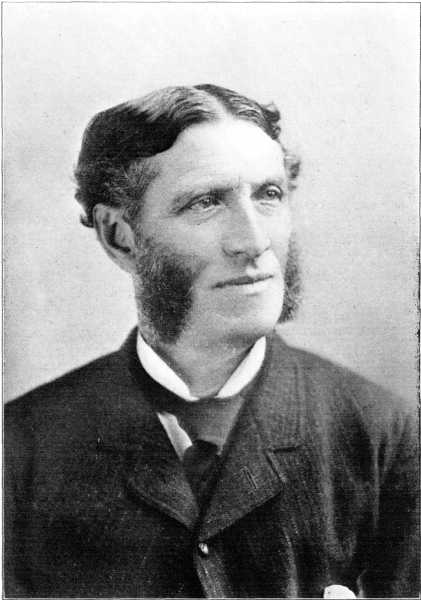
Matthew Arnold's Study of Poetry


I can honestly tell you that while I was reading this I never once looked at the time or counted how many pages I had left. It was like a portal to another dimension that absorbed and took over me. Arnold was a genius, in both his prose writing and poetry. I LOVE him! I think I highlighted the entire thing, but I promise to only chose a few to illustrate my point. "But for poetry the idea is everything; the rest is a world of illusion, of divine illusion. Poetry attaches its emotion to the idea; the idea is the fact. The strongest part of our religion to-day is its unconscious poetry." Although this isn't quite as beautiful as Shelley, it is profound and lovely. I really enjoyed how he tore apart and questioned all works, not just certain ones. Everything is fair game to Arnold. Another of my favorite lines is "indeed there can be no more useful help for the discovering what poetry belongs to the class of the truly excellent, and can therefore do us most good, than to have always in one's mind lines and expressions of the great masters, and to apply them as a touchstone to other poetry." His talk of touchstones really fascinates me, because I have had one for years and never known it.

Friday, October 31

"Hamlet is one of the great procrastinators in literature" ~Dr. Sexson

Giambattista Vico (Lisa)
  • Italian
  • humanist melancholy
  • 'the new science'
  • creations, not investigation
  • humanization is cyclical: divine (metaphor), heroic (satonomy and synecdoche), man (irony), and chaos (gibberish)
  • truth is a construction

Eric Auerbach (Danielle)

  • jewish
  • rhetorical rep in Odyssey, tyrannical in bible
  • Dante and Shakespeare inspired
  • no originality, all writing is based on close readings
  • history is cyclical, not linear

Samuel Taylor Coleridge (Chelsea)

  • poet, Romantic, critic
  • lyrical ballad- philosophical and critical approach to literature- begins w/ rhyme
  • imagination is important to literature
  • infinite 'I am' in lit
  • poetic faith
  • willing suspension of disbelief

Hayden White (Lisa)

  • historian
  • nothing about himself- knows he was destined for greatness because born in the same year as famous people (James Dean and Shirley Temple)
  • figural realism (literary vs historical)
  • history is poetical

________________________________________

  • What does 'to do' mean? To act
  • battlefield of truth: ritual= drama to do
  • immortality: pg 556 of DQ- man in green "And so the man who uses and treats poetry in the requisite ways that I have mentioned will be famous, and his name esteemed, in all the civilized nations of the world."
  • neg cap vs immortality
  • Philip Pullman was a great fan of Keats
  • pg 22: intro "I return to my question... he sees what we see, yet he sees something else too."
  • Freud's 'pleasure principle' vs 'reality principle' is present here
  • immortality: Ovid, Shakespeare and Cervantes
  • Brian Talbot quoting Woody Allen
  • Sonnet 18
  • 'no day but today' from rent
  • 'art for art's sake' Oscar Wilde
  • grasshopper and ant fable
  • 'truth is a construction' said Vico
  • kenosis: emptying out/ plerosis: filling up

Wednesday, October 29

"Be one on who nothing is lost..." ~Henry James


Henry James (Kelsey)
  • great novelist
  • themes: personal relationship, loneliness, unreliable characters
  • love and morals
  • possibly gay?
  • 'turn of the shrew' is a ghost story
  • interested in people, but never liked them

Ernst Cassirer (Victoria)

  • jewish historian
  • 'philosophy of symbolic form' book
  • man as a symbolic animal (domestic)
  • 'transcendental idealism'- Khan
  • human world created through symbolic form: expressive, representative, and significant

Walter Benjamin (Ben)

  • work rejected because too confusing
  • work of art and mechanical reproduction
  • aura: ability to be unique
  • sense of awe and amazement by viewer
  • because of mechanical representation: no auras anymore

Oscar Wilde (Kyle)

  • doesn't want truth- illusion
  • art is better than life and truth
  • cannot tell the truth, make them laugh instead or you will be killed
  • a portrait done with feeling is not of the sitter, but of the painter

__________________________________________________

Keats of Negative capability:
  • sounds like Sidney
  • beauty and truth: 'Ode on a Grecian Urn'
  • if something is really beautiful, than it is true
  • Shakespeare didn't write what he felt, he wrote to become everything
  • Shakespeare doesn't exist, only the world he created does

Don Quixote:

  • 'woo, woo' pages: 429, 556-7
  • cannon: everything should be didactic
  • DQ creates an entire Romance novel in his mind
  • aesthetic
  • didacticism is being parodied
  • nonsense writers: James Joyce, Lewis Carroll
  • Polonius from Hamlet
  • Walter Pater: "all the arts aspire to the condition of music"
  • don't ask what it means, experience what it is
  • 'nature is only nature, it needs and artist to portray it'
  • lobster quadrille
  • Ovid's final words "I shall have life"

Saturday, November 1, 2008

Monday, October 27

"That's what fairy tales are all about, puberty" ~Dr. Sexson


Presentations:

Samuel Johnson (Dustin):


Liza poet series
poetry should be simple and easy to understand

biography would be only the truth, not prose


Longinus (Kari):

Deeply influential
the Sublime is important to him
authentic aim is to judge and make sure that it's sublime
sublime: that which cannot be expressed because it is so much beyond anything else
control of metaphor
2 that reached this- Homer and Sapho


Michel Foucault (Erica):

postmodernist- doesn't like labels
French
all about relationships
prisoners (voices concerns and feelings)
3 volumes- History of Sexuality
repression hypothesis refuted in the 60's- it is steadily becoming the center of our lives

led to what we know today as sexuality
it is a huge part of us
archeology of knowledge

Julia Kristeva (Jake):

Bulgarian (southern)

psycho-analyst in the 60's

structuralists and semi- audist= signifier/ meaning

didn't like these things so created seminalist: no absolute meaning ex) sarcasm

inter-textuality: applied to text, not words

___________________________________________________________

My Book and Heart Notes for exam:
  • ideas that are taught (obvious)
  • 'practical advice' then is now common sense
  • death and rebirth when you start reading
  • innocence and experience

DQ:

  • when we learn to read we lose innocence
  • innocence to experience (Blake to Frye)
  • death/life, myth/realism, metaphor/ simile
  • when we read we become critics (Gaby's blog)
  • "I didn't like a movie/ book because..."= critic
  • Synedoecha, New York- Film
  • TS Eliot: "We shall not cease from our exploration And at the end of all our exploring Will be to arrive where we started And know the place for the first time"
  • Genesis: A&E ate the fruit of the knowledge of good and evil
  • intentional lies: first lies?
  • Frye believed that fairy tales are transparent
  • Werewolf movies:
  1. Blood and Chocolate (very bad, read the book)
  2. American Werewolf in Paris
  3. The Company of Wolves
  4. Wolfen
  5. Ginger Snaps
  6. Teen Wolf
  7. Underworld
  8. The Howling
  9. Dog Soldiers
  10. An American Werewolf in London
  • getting of literacy is the loss of innocence
  • pg 536 of DQ- everyone in part 2 has read part 1, like in Robin Hood Men in Tights when everyone pulls out their script, this is a very post-modern idea of metatheatricality
  • ever know a simple but good person who creates catastrophes everywhere?
  • continues from myth (romance) to realism (irony)
  • Frye says that when you reach the end of a cycle, you start again, you don't go backwards
  • innocence: "The innocent world is neither totally alive, like the apocalyptic one, nor mostly dead, like ours: it is an animistic world, full of elemental spirits. All the characters of Comus are elemental spirits except the Lady and her brothers, and the connections of Ariel with air-spirits, of Puck with fire-spirits..., and of Caliban with earth-spirits are clear enough." (pg 153)
  • TS Eliot '4 Quartets': Buirnt Norton, East Coker, The Dry Salvages, Little Gidding
  • Alice looks through the keyhole into the rose garden
  • The Rose Garden like in Alice, and Beauty and the Beast represents innocence
  • courtly love is all idealistic, not physical

Individual Presentations

Monday, October 27

  • Dustin
  • Kari
  • Erica
  • Jake

Wednesday, October 29

  • Kelsey
  • Victoria
  • Ben
  • Kyle

Friday, October 31

  • Lisa
  • Danelle
  • Chelsea
  • Sarah

Monday, Novemeber 3

  • Brittini
  • Alex
  • Jiwon
  • Kyle
  • Heather

Wednesday, November 5

  • Judson
  • Rosanna
  • Clair
  • Jon

Friday, November 7

  • Jessica
  • Douglas
  • Kayla
  • Chris

Monday, Novemeber 10

  • Doug
  • Joan
  • Kevin
  • Derek
  • Bobby

Wednesday, November 12

  • Gabby
  • Carly

Wednesday, October 22

"We've seen something that makes everything I've ever written look like straw" ~Thomas Aquinas

For Next Exam:

when religion no longer works, we go to the poets

JOHN KEATS:

  • "In Poetry I have a few axions, and you will see how far I am from their center. I think Poetry should surprise by a fine excess and not by Singularity" ~Remembrance by Keats
  • if you are going to make a mistake- over do it! Err on the side of excess
  • Babe: when the farmer is surprised, he dances when caring for the sick piggy

  • "and appear almost a Remembrance" to remember is the key, and remember you must have forgotten everything

NORTHROP FRYE:

  • Forms of nature
  • "Nature is now inside the mind of an infinite man who builds his cities of out of the Milky Way. This is not reality, but it is the conceivable or imaginative limit of desire, which is infinite, eternal, and hence apocalyptic. By an apocalypse I mean primarily the imaginative conception of the whole of nature as the content of an infinite and eternal living body with, if not human, is closer to being human than to being inanimate." Frye pg 119
  • Wallace Steven's '13 Ways of Looking at a Blackbird'
  • "No grave upon the earth shall clip in it a pair so famous. High events as these strike those that make them; and their story is no less in pity than his glory which brought them to be lamented. Our army shall in column show attend this funeral, and then to Rome. Come, Dolabella, see High order in this great solemnity." Last lines from Antony and Cleopatra
  • Apocalypse: apo- take away, calypse- veil= remove the veil
  • like removing the mask, curtain, etc to see the man.
  • OZ-
  • Apocalypse Now-

  • Matrix-

everything is an allusion


Shelley: Hymn to Intellectual Beauty

WW: Ode on Intimations of Immortality

Shelley, WW and Stevens: 'technically' were atheists, but all spoke of a higher power