Saturday, September 27, 2008

the tragic low-mimetic

According to Wiki the tragic low-mimetic is:

"Pathos (pronounced /ˈpeɪːθɒs/) (Greek: πάθος) is one of the three modes of persuasion in rhetoric (along with ethos and logos). Pathos appeals to the audience's emotions. It is a part of Aristotle's philosophies in rhetoric. Not to be confused with 'bathos' (βάθος) which is an attempt to perform in a serious, dramatic fashion that fails and ends up becoming comedy.
Pathetic events in a plot are also not to be confused with tragic events. In a tragedy, the character brings about his or her own demise, whereas those invoking pathos often occur to innocent characters, invoking unmerited grief.
Emotional appeal can be accomplished in a multitude of ways:

  • by a metaphor or story telling, common as a hook,
  • by a general passion in the delivery and an overall amount of emotional items in the text of the speech, or in writing.

For example, in Jane Austen’s Pride and Prejudice, Mr. Darcy persuades Elizabeth to reconsider her disposition of him through pathos in his letter when he informs her of Mr. Wickham’s offenses."

http://en.wikipedia.org/wiki/Pathos

This reference to Pride and Prejudice is what caught my attention and attracted me to this box. I LOVE P&P! Yes, I'm one of those girls. I am a very passionate person, and I get kind of emotional, so the 'pathos' box is right for me. Passion and emotion are very important to a story, it really can make or break a couple. Part of the reason that Darcy and Lizzie were so perfect for each other was because they were both so passionate, not simply for each other, but for life as well. That passion is important to share.

Don Quixote

As I am discovering, although DQ is an easy read, it is hard to motivate myself. The poems at the beginning are hilarious and wonderful. I hope that the rest of the novel turns out as great. Here's hoping... 940 pages is sure a lot if you don't like what you're reading.

Archetypes of Literature

While reading the 'Archetypes of Literature' I was struck by how scientific sounding it was. I felt like I was reading Darwin's 'Origins of Species' but about literature. This is not a bad thing, because I find it fascinating to read about something in a variety of ways, but strange none-the-less. It is scientific, but also poetic, this is a strange idea to me, one that I had never pondered before this class. That something can talk about science in a poetic way is brilliant. I'm sure that if Milton or Shakespeare would have written about the periodic table or blood cells I would have learned it so much better! And I'd probably even like it. I understand that as an English major I have a bias towards literary works such as these, and that scientist would 'goff' at this, but I really think that Frye had something going. Lines like: "Art, like nature, is the subject of a systematic study, and has to be distinguished from the study itself, which is criticism," "If such a pattern exists, then criticism would be to art what philosophy is to wisdom and history to action," and "The only weakness in this approach is that it is conceived primarily as the antithesis of centrifugal or 'background' criticism, and so lands us in a somewhat unreal dilemma, like the conflict of internal and external relations in philosophy." Before my biological anthropology class in community college, I would have read this and instantly fallen asleep. But like I learned then about Darwin, and now about Frye, patently waiting for the author to get to the point is generally worth it. My absolute favorite line from this essay was "we hear or listen to a narrative, but when we grasp a writer's total pattern we 'see' what he means." When Frye describes this moment of epiphany that will inevitably follow any in depth reading of literature, he described the truth. In an epiphany you actually 'see' what the words mean. It is much more than a moment of understanding, it is a moment of clear vision.

My grid

for the life of me I cannot figure out how to get this grid on my blog. and my scanner is not working... bummer.

my critic:

WOLFGANG ISER


Wednesday, September 24

"Poetry can kill a man" ~ Dead Man


alphabet song and video (with Patrick Stewart!!)


"Whose spirit is this? we said, because we knew IT was the spirit that we sought and knew That we should ask this often as she sang. If IT was only the dark voice of the sea That rose, or even colored by many waves; If IT was only the outer voice of sky And cloud, of the sunken coral water-walled, However clear, IT would have been deep air, The heaving speech of air, a summer sound Repeated in a summer without end And sound alone. But IT was more than that, More even than her voice, and ours, among The meaningless plungings of water and the wind, Theatrical distances, bronze shadows heaped On high horizons, mountainous atmospheres Of sky and sea."

  • What is IT?!

scripture: either the bible or something that you take so seriously it becomes your bible.

"On the mythical plane there is more legend than evidence, but it is clear that the poet who sings about gods is often considered to be singing as one, or as an instrument of one. His social function is that of an inspired oracle; he is frequently an ecstatic, and we hear strange stories of his powers. Orpheus could draw trees after him; the bards and ollaves of the Celtic would could kill their enemies with their satire; the prophets of Israel foretold the future. The poet's visionary function, his proper work as a poet, is on this plane to reveal the god for whom he speaks. This usually means that he reveals the god's will in connection with a specific occasion, when he is consulted as an oracle in a state of 'enthusiasm' or divine possession. But in time the god in him reveals his nature and history as well as his will, and so a larger pattern of myth and ritual is built up out of a series of oracular pronouncements." ~pg 55 of N. Frye

chronicle: names of people who are really important

incantatory

'The Sotweed Factor, or A Voyage to Maryland' by John Barth is a satire of the national poem "The Sot-Weed Factor' by Ebenezer Cooke, which is a horrible poem

The poet is a recorder, not a participant


the muses, the daughters of Mnemosyne:

  1. Calliope- chief muse and muse of epic or heroic poetry
  2. Clio- muse of history
  3. Erato- muse of love or erotic poetry, lyrics and marriage song
  4. Euterpe- muse of music and lyric poetry
  5. Melpomene- muse of tragedy
  6. Polyhymnia- muse of sacred song, oratory, lyric, singing and rhetoric
  7. Terpsichore- muse of choral song and dance
  8. Thalia- muse of comedy and bucolic poetry
  9. Urania- muse of astronomy
you can kill your enemies with satire! like in Dead Man

Poems are very powerful in the world of thematic myth

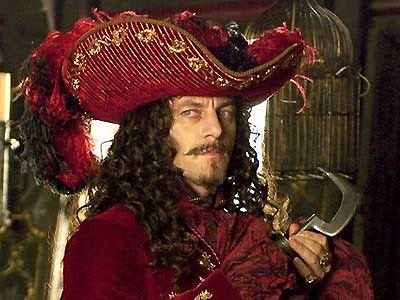
a chant killing someone: From Peter Pan. I do believe that the chant of "old, alone, done for" kills Hook in the end.

enthusiasm: divine possession


ARISTOTLE'S POETICS:

* Plato: was his teacher, and he was making fun of poetry because poetry (art) has no place in his ideal republic

*he throws them outside the door of his city

*they are liars because they engage in an imitative art

*imitation of a bed is not a literal bed

*Plato believed that even real things are a representation of the divine that are above us, not making them real either

*so he believes that poets or all artists imitate and imitation

*poets are deranged, which makes them in the thematic myth category because they are possessed

*Frye spoke of this too, but used a cat as an example instead of a bed


My cat Tigger

"The poet is an empty vessel in which the imagination flows" ~ Romantic viewpoint

Friday, September 26, 2008

Monday, September 22

"You can tell by the way people speak if they are great readers or not" ~Dr. Sexson


Blog Assignments:
  1. intro to your critic: photos, central contribution to lit crit and wiki info
  2. connect 'Idea' to 4 elements
  3. link 'Idea' to N. Frye's 2nd chapter
  4. talk about where you are in DQ and what you think about it
  5. talk about what you understand from N. Frye
  6. write about other people's blogs
  7. become obsessed with a box from the grid

comedy section: 'A Midsummer Night's Dream'

William Blake is ESSENTIAL to understanding N. Frye

"Sancho, my friend, know that I was born, by the will of heaven, in this our iron age, to revive the one of gold, or the Golden Age, as it is called. I am he for whom are reserved dangers, great deeds, valiant fears. I am, I repeat, he who is to revive the Knights f the Round Table, the Twelve Peers of France, the Nine Worthies, he who is to make the world forget the Platirs, Tablants, Olivants, and Tirants, the Phoebuses and belianises, and the entire horde of famous knights errant of a bygone age, by performing in this time in which I find myself such great and extraordinary deeds and feats of arms that they will overshadow the brightest they ever achieved" pg 142 D. Q.
  • he wants to revive the Romantics
  • quixotic figure: like Oscar Wilde- completely dedicated to an ideal
  • create through imagination a world that is not really there
  • it has a 'dark side' though: living in a different world, creating something that is not there, turning yourself into a fool- or 'tilting at windmills'
  • "mad as a hatter" ~Lewis Carroll
  • "not making fun of someone is worse, because then you have to 'humor' people" ~Dr. Sexson
  • 'humoring' them is one of the worst things that you can do "We laugh at something that points out another's errors, lack of intelligence, or unfortunate circumstances; granting a sense of superiority." ~wiki humor article

"'I'm of the same opinion,' said the barber. 'And so am I,' added the niece. 'Well, then,' said the housekeeper, 'hand them over and into the corral with them.' They handed them to her, and there were a good many of them, and she saved herself a trip down the stairs and tossed them all out the window." pg 47 of D. Q.

An example of a great reader: "Miss Eliza Bennet," said Miss Bingley, "despises cards. She is a great reader, and has no pleasure in anything else." "I deserve neither such praise nor such censure," cried Elizabeth; "I am NOT a great reader, and I have pleasure in many things." ~Pride and Prejudice chpt 8


80-90% of people didn't read a single book last year

Book banning:

  1. Harry Potter books by JK Rowling
  2. The Joy of Gay Sex by Edmund White
  3. Of Mice and Men by John Steinbeck
  4. The Adventures of Huckleberry Finn by Mark Twain
  5. for a complete list of books challenged between 1990-2000

*The people that ban these books decide to throw out certain books that they didn't like

*If literature is ever banned the only way to know it is to memorize it

Fahrenheit 451


a very funny episode of Friends with Joey's 'air quotes'


Ramon Fernandez from 'Idea'

Wallace Stevens on Ramon


Audiences in 'Idea':

  1. she is the sea's audience
  2. the people in the poem are watching her
  3. us as readers are also an audience

when the singing stops, the world is changed

Wallace Steven's '13 Ways of Looking at a Blackbird'


innuendos: you live in irony all the time, words are suggestive

Lolita's first lines: "Lolita, light of my life, fire of my loins. My sin, my soul. Lo-lee-ta: the tip of the tongue taking a trip of three steps down the palate to tap, at three, on the teeth. Lo. Lee. Ta. She was Lo, plain Lo, in the morning, stating four feet ten in one sock. She was Lola in slacks. She was Dolly at school. She was Dolores on the dotted line. But in my arms she was always Lolita." ~Vladimir Nabokov

elegy: form of poetry that speaks about tragedy
Aristotle: all of the pieces fit together, if you remove one part, it all falls apart


special effects:
  • aren't organic
  • shallow outlook
  • plot is the most important

Frankenstein's monster evokes pathos because he wants a family and friends but never can

tragedy according to Aristotle's Poetics: isolation from a community
Pathos: heroic, but not pathetic

trashy lit: